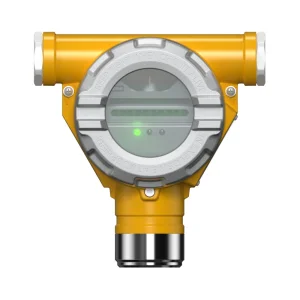
Architecting Safe Environments: Industrial OEM Carbon Monoxide Detection Whitepaper
Carbon Monoxide (CO) represents one of the most volatile and insidious risk vectors within industrial, commercial, and residential ecosystems. As an odorless, colorless, and tasteless toxic gas, the mitigation of CO hazards demands instrumentation of unparalleled sensitivity, rapid response profiles, and absolute long-term reliability. Globally, enterprises, facility managers, and safety compliance officers are shifting from reactive safety models to integrated proactive telemetry systems. This transformation is driven by shifting regulatory conditions and the integration of smart building automation systems.
As a leading OEM Carbon Monoxide Detector Supplier, our role goes beyond raw assembly; we design, build, and deliver safety systems that protect lives. Modern industrial environments require multi-tier safety infrastructures where CO detection is seamlessly connected with intelligent gas safety shut-off systems, flame sensors, and localized exhaust ventilation control boxes. This comprehensive integration ensures that if toxic gas accumulates, immediate countermeasures are triggered at the hardware level, long before threshold limits endanger human life.
"Total industrial and municipal gas safety cannot rely on isolated warning signals. True safety lies in hardware and system integration, where gas detectors, smart valves, and central control panels form a responsive grid against invisible atmospheric threats."
Sensing Technologies: Physics of CO Detection & Sensor Integrity
Developing highly reliable CO detectors requires choosing the right sensor technology for specific ambient challenges. Our OEM factories utilize three main sensor architectures depending on the installation environment:
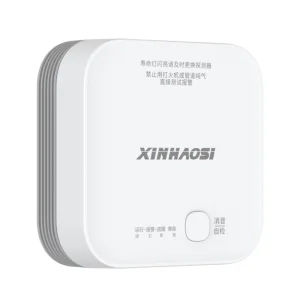
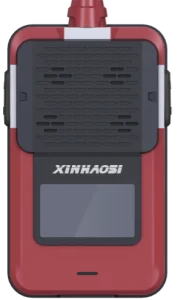
- Electrochemical Cells: These sensors are the industry standard for toxic gas detection. They measure CO concentrations by oxidizing carbon monoxide at a sensing electrode, generating an electrical current directly proportional to the gas density. These cells offer high selectivity, excellent linear response, and low power requirements, making them ideal for residential detectors and portable devices (such as the XM314 Portable Detector).
- Non-Dispersive Infrared (NDIR): Primarily configured for hydrocarbon gases and combustible materials, NDIR sensors target specific gas absorption wavelengths. By analyzing the reduction in infrared light intensity, they calculate precise gas volumes. In critical industrial applications, NDIR systems provide reliable monitoring with minimal drift and no risk of sensor poisoning.
- Metal Oxide Semiconductor (MOS): These sensors feature a tin dioxide (SnO2) semiconductor layer that increases its electrical conductivity in the presence of reducing gases like CO. Known for their durability and fast response times, MOS sensors are ideal for heavy-duty industrial settings where environmental resilience is critical.
Macro Solutions & Systems: From Detection to Automatic Shut-Off
A comprehensive safety infrastructure must handle every step from detection to automated hazard mitigation. In commercial kitchens, multi-family residential complexes, boiler rooms, and underground parking structures, our integrated OEM solutions ensure seamless operation:
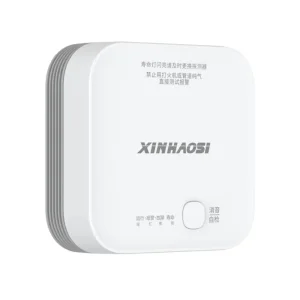
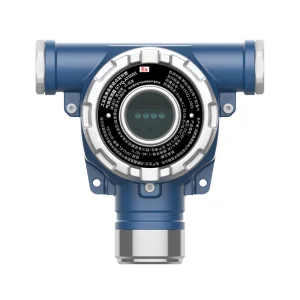
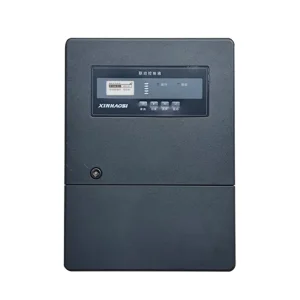
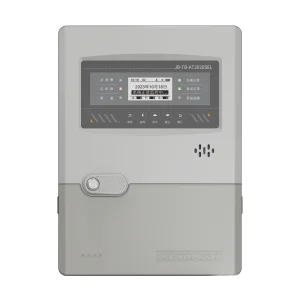
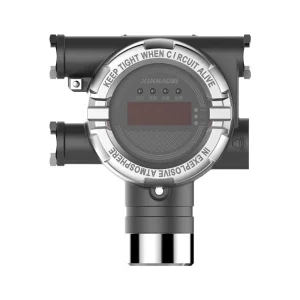
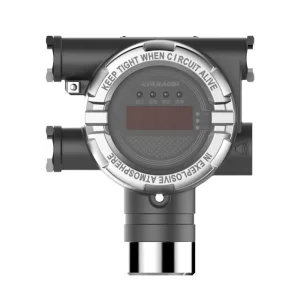
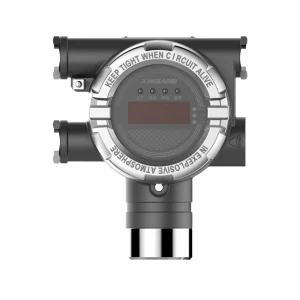
When an active gas leak or CO accumulation is detected by sensors like the JT-AT2008 series or industrial transmitters like the GTYQ-XP4000, they send a signal back to a central controller, such as the JB-TB-AT2020LH. This central controller serves as the primary system brain, managing alarm outputs, ventilation overrides, and emergency shut-off protocols.
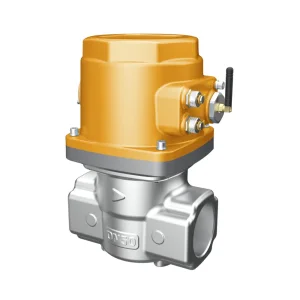
Simultaneously, the controller triggers a dedicated automatic control box (such as the JB-MK-AT2041X Interlock Control Box), which immediately cuts power to high-pressure gas feeds using heavy-duty solenoid valves (such as the Household Gas Solenoid Valve XF2 Series or Industrial Smart AI Gas Safety Valves). This rapid shut-off prevents gas buildup at the source, preventing potential explosions or toxic exposure.